THAILAND · HOUSING
This guide contains affiliate links. If you buy through them I may earn a commission at no additional cost to you.
We came here with a number and a condition: 20,000 THB a month, and somewhere the dog could live. We signed at 25,000, in a house that I had not seen on either of the sites I was searching.
Where I looked, and what actually worked
I started with two Thai rental sites and read them using machine translation. They were useful for calibration. After a week I knew roughly what 15,000 buys and what 30,000 buys, which was worth the time.
I was told the better places move through Facebook groups. I tried, and I could not make it work. The listings went past faster than I could follow them, in a language I do not speak.
What found our house was a person. On a scouting trip in January, a local guide put together a shortlist for me. Ours came from that: a friend of a friend’s place, which I had not seen listed on the sites I was using. I did not find it through my own searches.
I am not telling you to hire a guide. I am telling you what worked for us: if you know one person here, ask them before you open a rental site.
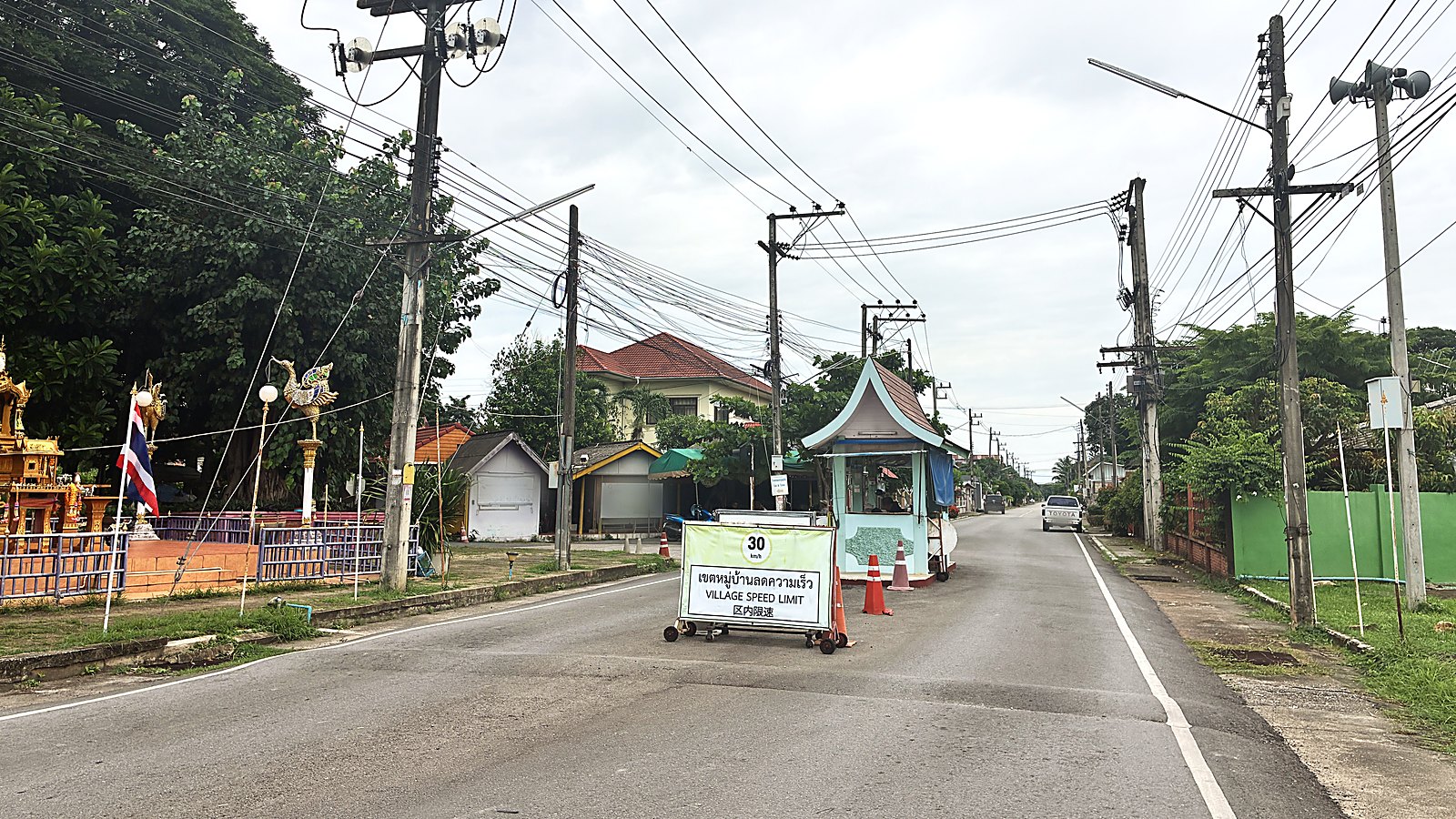
Moo baan
Moo baan was one term I needed to understand. It is used for a village, and it is also what people call a housing estate — a group of houses laid out together. Ours has a gate and someone on it, which is not true of every one.
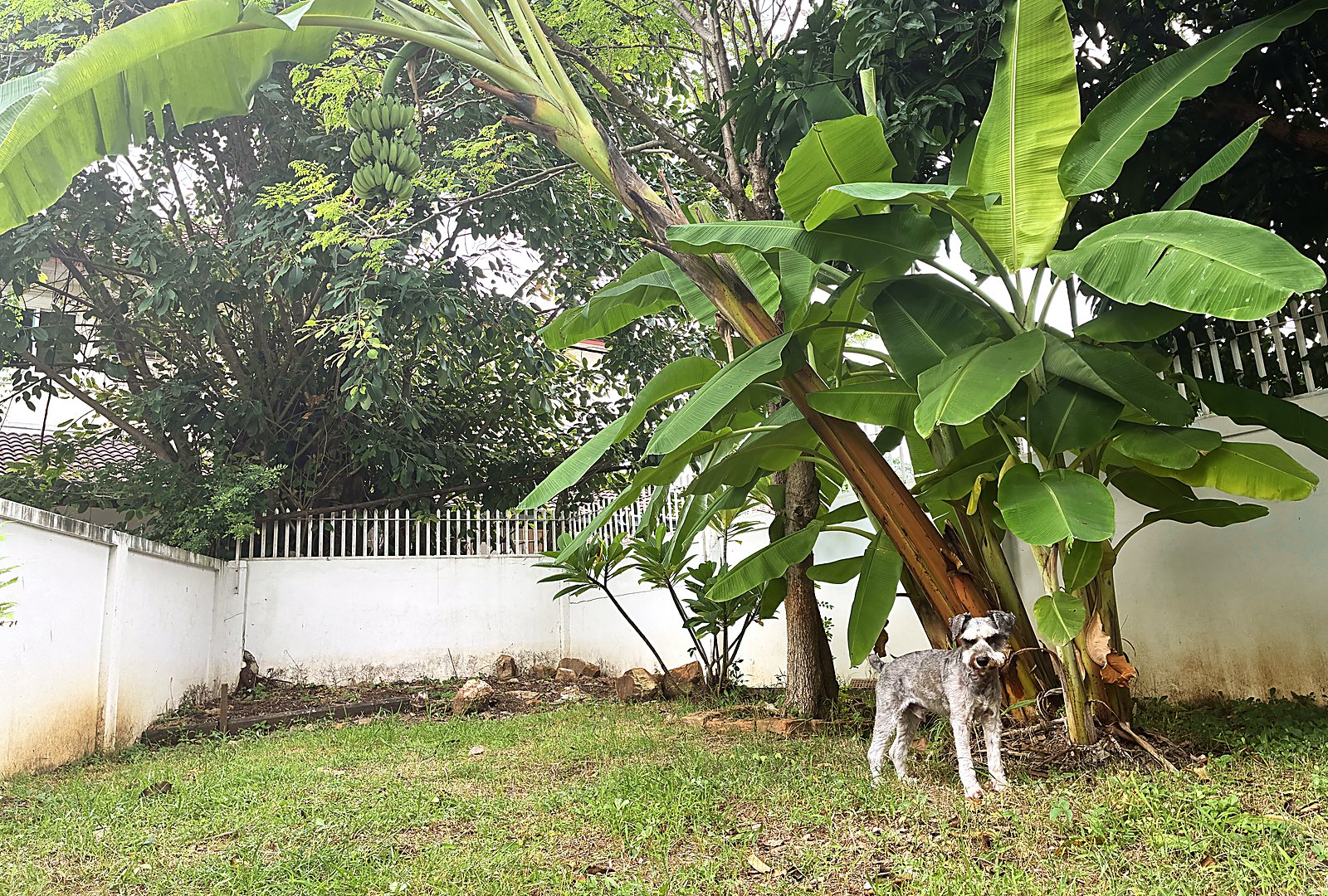
That mattered to us because of the dog. The garden is inside the estate, so when he is out there he is not next to a public road. With a child and a dog, that was the thing I was actually buying.
The house I turned down
A new build in Hang Dong, south of the city. About 10,000 THB a month — less than half what we ended up paying.
I turned it down for four things:
- It was small.
- There was a dog running loose directly opposite, unfenced.
- Mosquitoes, noticeably, in the middle of the day.
- Thirty minutes each way to the school.
The last one is what I would weigh most heavily now. The rent I would have saved would have gone into fuel, and into the part of the day I do not get back. We ended up 15 to 20 minutes from the school instead.
Three things I check at a viewing
These are the three my family would not compromise on. Yours will be different.
1. How long is the daily route? School, supermarket, hospital. Ours runs 15 to 20 minutes to the school, and that is the ceiling I would use again. You drive it twice a day for a year.
2. Insect screens. Unglamorous, and the thing I would look at first. Are they on the windows, do they close, and has anyone already patched one?
3. The water and the plumbing. Ask, and look:
- Can you flush toilet paper, or does it have to go in a bin? Ours goes in a bin.
- Is there a bathtub, or only a shower? Every house I viewed had a shower and no bath.
- Is the water heater retrofitted, and does it run? Turn it on while you are standing there.
- Air conditioning: how many rooms, and how old.
- If it comes furnished, look at the mattress properly.
What we paid to move in
The deposit was two months. That was the landlord’s term.
On the rent, one month up front was what was asked for. I offered three. Nobody required it. We were a foreign family with no rental history in this country, no Thai bank account, and nothing to show that we would still be here three months later. Paying more up front was the only credential I had.
I do not know whether it changed anything. We got the house.
I paid the full move-in amount in cash, carried over from Japan, which I would not do again — how we actually move money into Thailand covers what the same payment costs by transfer.
I opened this account before we flew and use it every month. Fees change with the amount and the route, so check yours rather than mine.
Something I did not know when I offered
I found this out after we signed. I wish I had known it beforehand.
Thailand has rules governing certain residential rental contracts, in force since B.E. 2568 (2025). The Office of the Consumer Protection Board describes what it requires of landlords covered by the regulation, and the conditions include:
- a standard-form contract, in Thai, written to be readable, with a copy handed to the tenant
- advance rent and deposit together must not exceed three months of the monthly rent
- the deposit returned within seven days of the contract ending, where no damage is found
- water and electricity charged at no more than the rate the utility charges the landlord, with the calculation stated in the contract
Our arrangement was five months in total — two months’ deposit, three months’ rent. The three months was my offer, not a demand, and I made it without knowing the regulation existed.
I have not verified whether our landlord falls under it. The notification applies to landlords who meet the conditions in the law, and I have not established that. I am not a lawyer and this is not legal advice.
Before signing, compare your contract with those four points and ask whether the regulation applies. It is easier to ask before you sign than after.
The clause I asked for and did not get
Our contract runs for a year, and it has no break clause. I asked for one. I was told that is not how it is done here.
That was one landlord, on one house, and I have signed exactly one lease in this country. But it is what I would raise at the start of a conversation rather than the end, and I would ask specifically:
- What happens to the deposit if we leave at eight months?
- Is there any circumstance in which the contract can end early?
Ask before you fall in love with a house. We asked after.
What the landlord did that I did not expect
Before we moved in, without being asked: a new bed, a spiral staircase up to the roof, the rusted gate repainted, a crockery cupboard, an air conditioner.
The contract was in English, because the owner speaks it. I ran it through a translation tool before signing, which I would do again.
What I would do differently
- Ask one person here before opening a rental site. I did not find our house through my own searches.
- Put the daily drive ahead of the rent. The cheaper house was thirty minutes each way from the school.
- Ask about the exit, and about the deposit rules, at the start. I asked about the exit at the end, and I read the regulation months later.
→ What all of this costs once you are living in it is in what a family of three actually spends here.
FAQ
How much is rent in Chiang Mai?
Ours is 25,000 THB a month for a house in a moo baan with a garden, signed in 2026. I viewed a smaller new build in Hang Dong at about 10,000. Those are two points from one family’s search, not a survey.
Can I find a house online?
You can calibrate online. I did not find ours that way. Ask anyone you know here before you rely on listings.
How much deposit is normal?
Ours was two months, and I offered three months of rent up front on top of that. Note the regulation above: for landlords covered by it, advance rent and deposit together are capped at three months. Check your own contract.
Can I get out of a lease early?
Our one-year contract has no break clause and the landlord declined to add one. I have signed one lease here and cannot tell you how common that is. Ask before you sign.
Are houses furnished?
Ours came furnished and the owner added to it before we arrived. Check the mattress and the water heater yourself.

I split the year between Kamakura, Japan and Chiang Mai, Thailand, and write these guides from our own records, our own experience, and named sources. More about me.
Last updated: September 2026. This is one family’s lease, signed in 2026. Rules and prices change — check your own contract and your own quotes.
→ More on this: all our guides on daily life in Chiang Mai.