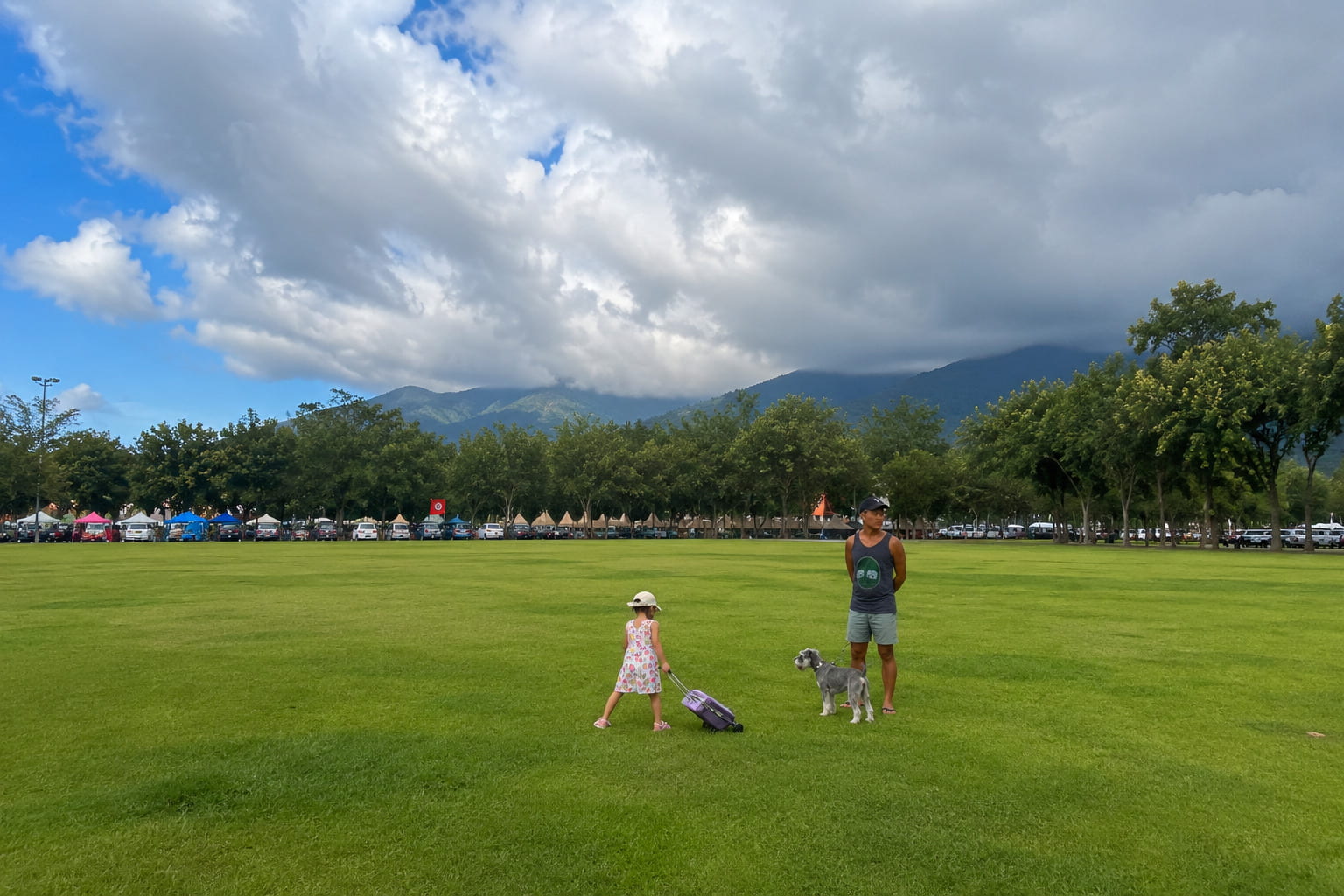
THAILAND · RELOCATION
This guide contains affiliate links. If you buy through them I may earn a commission at no additional cost to you, and I only recommend things I have used myself.
Currency: amounts I paid are given in the currency I paid them in. Conversions use the Bank of Japan’s official rate for August 2026 — ¥161 to US$1 and 100 THB to US$3.04, which puts 1 THB at about 4.89 yen — and are there for scale only. Ranges, quotes and future budgets are estimates, not payments.
Four things decided whether our move to Chiang Mai worked in 2026: a visa that lets you stay (the 5-year DTV is the route I took for remote work), enough savings to prove it (500,000 THB — Tokyo asked for three months of statements when I applied), a monthly budget that is low by Western standards, and a short list of logistics — connectivity, money, insurance, transport, and housing. I moved here in my forties with my family and our dog; from the first decision to actually living here took about six months. Amounts we paid are identified as such; ranges and future budgets are labelled as estimates. Each section below links to a longer guide on that one topic.
Is Chiang Mai right for you?
Chiang Mai suits remote workers, long-stay travelers, and families who want a low cost of living, fast internet, and a large, settled expat community without the intensity of Bangkok. This guide is less useful if you are visiting for under two weeks — a short trip needs a very different checklist than a move. I made the move with a young family and a dog, and the visa, the house, the school and the paperwork each took work, but daily life since has been straightforward.
Visas: how to stay long-term
The Destination Thailand Visa (DTV) is the route I took for remote work. You will also see it called Thailand’s digital nomad visa — same visa, different name. In 2026 the key facts are:
- A 5-year, multiple-entry visa. Each entry allows up to 180 days, extendable once per entry for another 180 days at a local immigration office.
- You must show financial evidence of at least 500,000 THB; the MFA lists bank statements, payslips or a sponsorship letter, and the accepted evidence depends on the post. The Royal Thai Embassy in Tokyo asked me for three months of bank statements, and that is the requirement I can speak to. Posts publish their own document lists, so check the one you are applying to. Tokyo asked for bank statements specifically; I did not test whether crypto or brokerage statements would have been accepted, and I have not found a published rule banning them.
- You apply online through Thai e-Visa; the portal asks for your current location and the post you submit to. The MFA headline figure is 10,000 THB; Tokyo publishes ¥52,000, so check your post’s fee.
- You apply under a category: remote work for a foreign employer or clients, a “soft power” activity such as a Muay Thai or Thai cooking programme, or medical treatment. I have seen it widely reported that Thai language courses no longer qualify, and that soft-power programmes need to run six months, but I could not find either rule in the Thai government material I read. Treat both as unconfirmed and ask the post you are applying to.
- I was not asked for proof of health insurance in Tokyo, and I could not find a published DTV insurance requirement; check the post handling your application. See the Insurance section.
- Chiang Mai’s immigration office is now on Airport Road (71 M.3, Suthep, Mueang Chiang Mai 50200). The old Promenada office has closed, and there is a smaller service counter inside Central Festival. Check which one handles what before you queue anywhere. This is the office our family actually uses, and we are there often: the TM30 address notification each time we re-enter the country, my wife’s 90-day report, and our daughter’s visa extension — hers runs in 90-day blocks, so it comes round again every three months. My wife was there for the 90-day report and the extension on 11 August 2026.
How it actually went, in my case
My route was less linear than the official summary, and I confirmed with the interviewing officer that the visa was still valid. I first entered Thailand as a tourist. I then returned to my home country for the DTV interview at the Thai embassy, applying under the remote-worker category with the help of a Thailand-based agent, ISJ Longstay Thailand. The visa had not yet been issued when I travelled back to Thailand, so I re-entered as a tourist again; approval came through on June 2 while I was already in the country. On my next trip out and back — a work trip home — I entered on the DTV itself. The agent cost 45,000 THB (~$1,370) in total: a 10,000 THB retainer applied to the government fee, plus a 35,000 THB success fee on approval. I budgeted about six months and first contacted an agent in October. Build in a longer buffer than you think you need, and do not book anything that depends on a visa you do not yet hold.
→ Full guide: how I actually got the DTV visa — the real timeline, the 500,000 THB rule, what it cost, and where it nearly went wrong.
What it costs to live here
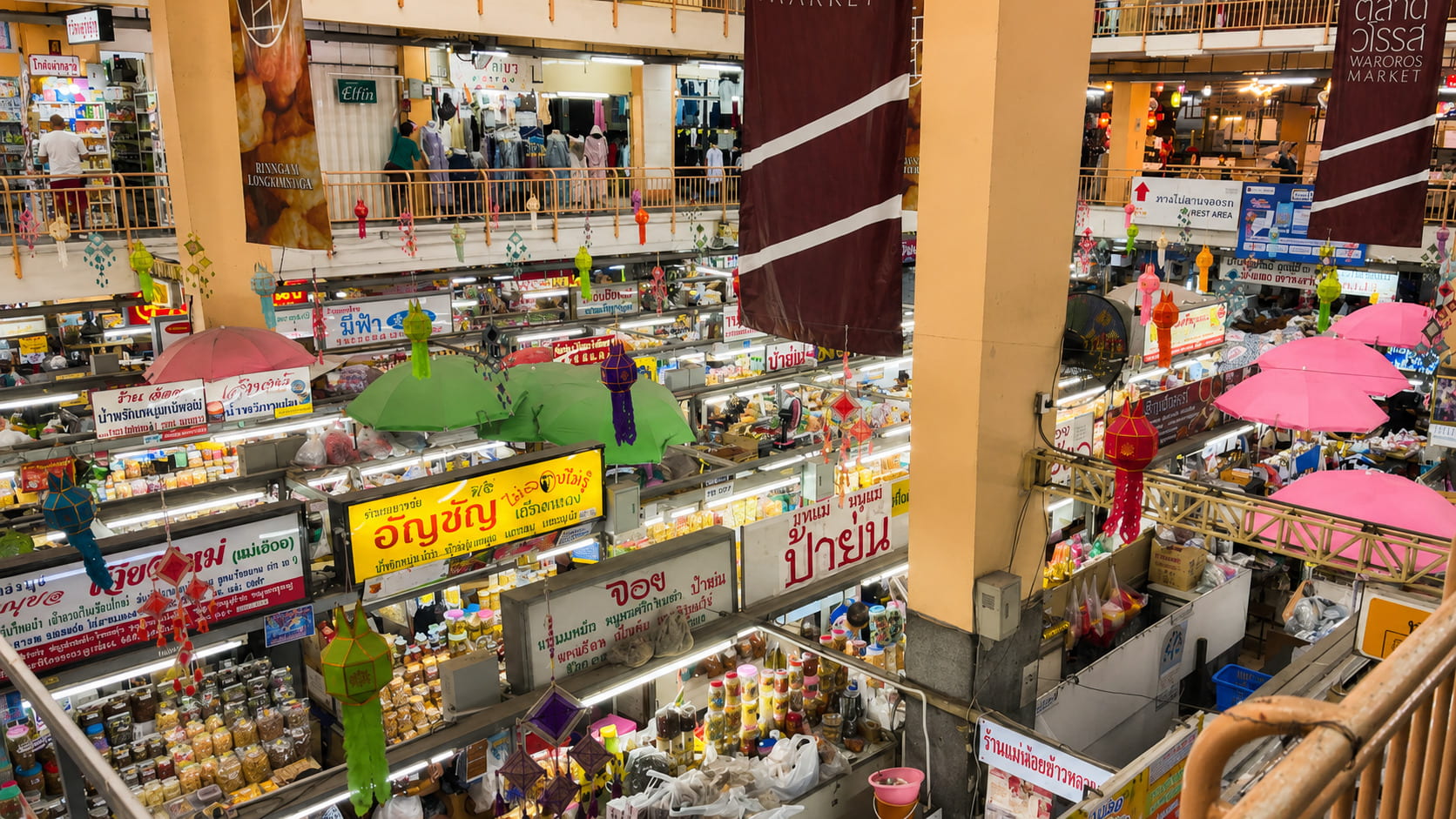
I have never lived here alone, so I cannot verify a single-person budget. What I can give you is our household. Our rent is 25,000 THB (~$760) a month. For day-to-day spending, I bring yen in cash and change roughly ¥100,000 (~$620) into baht about every three weeks. Our daughter’s school fees are billed separately (see Family & pets). Even small line items add up: drinking water, for example — the cheapest I’ve found is a six-pack of 1.5L bottles at Big C for 39 THB, but for our household it’s around 700 THB (~$21) a month.
→ Full guide: what our family of three and a dog actually spends in Chiang Mai — the month-by-month numbers, and the electricity bill that fell 71% in the same house.
Getting connected: SIM, eSIM, and internet
Arrive with an eSIM so you have data the moment you land, then settle on a longer-term plan. For a long stay I don’t rely on travel eSIMs — my setup is a pocket Wi-Fi paired with an annual SIM that gives about 100 GB a month, which I bought through Lazada (Thailand’s main online marketplace). Over months it works out far cheaper than repeatedly topping up a travel eSIM.
Data is only half of it. I also hold a contract with True, one of the local carriers, purely to have a Thai phone number. If you are staying months rather than weeks, treat that as essential rather than optional. Deliveries, bank and government forms, appointments, the man coming to fix the aircon — a surprising amount of ordinary life here asks for a local number, and a foreign one will not do.
One more thing worth knowing before you arrive, because it catches people out. Everyone we have had to deal with here uses LINE, not WhatsApp. Our landlord, our daughter’s school, the vet and the man who delivers our drinking water all asked for a LINE account and nothing else. I cannot tell you that holds for the whole country; it has held for every arrangement we have made. Install it and set it up early, because it is the address people here will actually use to reach you.
Two things about eSIMs are worth saying plainly, because the marketing does not. The travel eSIM I use is data-only, so it does not give me a Thai phone number, and the number is the part that ordinary life here keeps asking for. Treat them as two separate purchases rather than one.
The second is that they do not always work the moment you land. One of mine did not connect on arrival and took roughly a day to come up. I still cannot tell you why. If your first hours depend on being reachable — a driver, a landlord, a school — do not let a single eSIM be the only thing standing between you and a phone that works. I write up what I have actually paid, and the one that failed, in my first-hand eSIM guide.
→ Full guide: the eSIM plan I was sold, and the one I actually use — what data-only really means, why one of mine did not connect on arrival, and what I pay each month.
→ Full guide: what happened when I landed in China with two eSIMs — why one of them was useless there, and what I would buy before flying next time.
Money and banking
The cheapest way I’ve found to move money into Thailand is Wise, and I track the actual fees rather than the headline rate. A recent transfer of ¥100,000 (~$620) cost just ¥931 in fees — under 1%, and sending money on to a Thai account cost me 61.44 THB on a 120,000 THB payment, about 0.05%. Opening a Thai bank account is a different matter. The DTV is classified as a tourist visa, and every branch I approached in Chiang Mai declined on that basis. Krungsri’s foreign currency deposit page excludes Tourist VISA customers, but I do not have a verified rule covering every bank or account type, so I can only tell you what happened to me.
What you lose without an account is narrower than it sounds, and it is worth being precise about it. You cannot hold baht here, and you cannot pay by the QR codes that Thai people use for almost everything. What you can still do is send money into somebody else’s Thai account. We bought a used car that way — 120,000 THB straight to the seller’s account, for a 61.44 THB fee — and our rent goes the same way from next month. Day to day, rides and food are settled in an app on a card: an 83 THB ride goes through exactly like a 2,807 THB hardware-store run.
The mistake I made was assuming that large payments here are cash payments. To move into our house I carried 125,000 THB in physical notes — a 50,000 THB deposit plus three months’ rent — changed at an exchange office and carried across town. From next month that same rent goes to that same landlord by transfer. I never asked, at the time, whether the deposit could have gone the same way. Ask for bank details before you assume anything needs to be paid in cash.
On the exchange rate itself, the two routes were closer than I expected. In April 2026 I changed 1,000,000 yen at a licensed Chiang Mai exchange office and received 200,000 THB — an effective 5.00 yen to the baht. My multi-currency account charges about 0.93% on a 100,000 yen conversion, which is one tenth of that amount, so the two are not comparable. I did not have a like-for-like app quote that day, so I cannot state the difference. The rate is not where the money goes; the sending fee and the cash-handling are. Two things are worth being exact about here. The 61.44 THB is the sending leg only. Turning yen into baht in the first place is a separate charge, and it is easy to read one of those numbers as though it covered both. The second is that the conversion charge is not a single number. Wise does not publish a fixed rate: its pricing page for customers in Japan says only that the fee varies by currency and starts at 0.73%. Its own calculator quoted me three very different rates within a few minutes on 8 August 2026: 3.36% on a 10,000 JPY transfer (~US$62), 1.02% on 1,000,000 JPY (~US$6,200), and 0.65% on 20,000,000 JPY (~US$124,000), the last of those after a volume discount. Wise publishes that discount as tiered — the standard fee on the initial portion, lower percentages only on amounts in higher brackets — tracked in USD for a Japan-registered profile. The percentage falls as the amount rises, so “about one percent” is not a safe rule of thumb if you send small sums often.
→ Full guide: sending money to Thailand without a Thai bank account — the four layers we use, what each one costs, and the day I carried 125,000 THB across town.
Insurance and healthcare
Chiang Mai has excellent private hospitals, but for a long stay you need cover that works here and back home — and that doesn’t quietly expire on you. That expiry date is what catches people out.
- SafetyWing’s Essential plan lets you add one child under 10 to an insured adult’s plan at no extra premium — two per family, and only at the point of purchase. Confirm the current terms on your own quote.
- Essential can continue beyond the 90-day limit on my two Japanese cards, subject to its terms and exclusions. Check your own card’s limit and reset rule.
- Paid every 28 days; future renewals can be stopped. You can start it after you have already flown out.
Reader offer: new SafetyWing members can get 8 weeks of electronics-theft cover free with the code CROSSSHORECHIANGMAI. Click the pink camera icon on the Nomad Insurance page and apply the code before you create your account. It works on 28-day or annual Nomad Essential subscriptions, for new members only. Worth knowing: after the eight weeks, the add-on renews as a paid extra unless you cancel it. I confirmed the code on my ambassador dashboard on 10 August 2026; SafetyWing can change the offer or code validity.
→ Full guide: health insurance for living in Chiang Mai — where the cover actually stops, the four options, and what each one quoted us.
→ Full guide: travel insurance for a trip to Thailand — the 90-day credit-card cover I rely on, and the point where it stopped being enough for my family.
Getting around
Day to day, most people use songthaews (shared red trucks, about 20–30 THB a ride) and Grab. Grab can save real money on the airport run, but the saving depends on where you stand when you order it: a ride quoted at 220 THB from inside the airport cost me 70 THB when I walked a few hundred metres out and ordered from the road instead.
For a long stay, a Thai driving license is straightforward — it starts with a 200 THB health check, then simple reaction, colour, and depth-perception tests at the license center for about 205 THB. One thing that surprised me: here you end up carrying two separate licence cards. Japan divides the entitlements too — a standard Japanese car licence covers mopeds up to 50cc, and anything larger needs a separate motorcycle licence (National Police Agency, checked 6 August 2026) — but in Japan both are printed on the one card in your wallet. In Thailand they are issued as two, so if you intend to ride as well as drive, plan and budget for both.
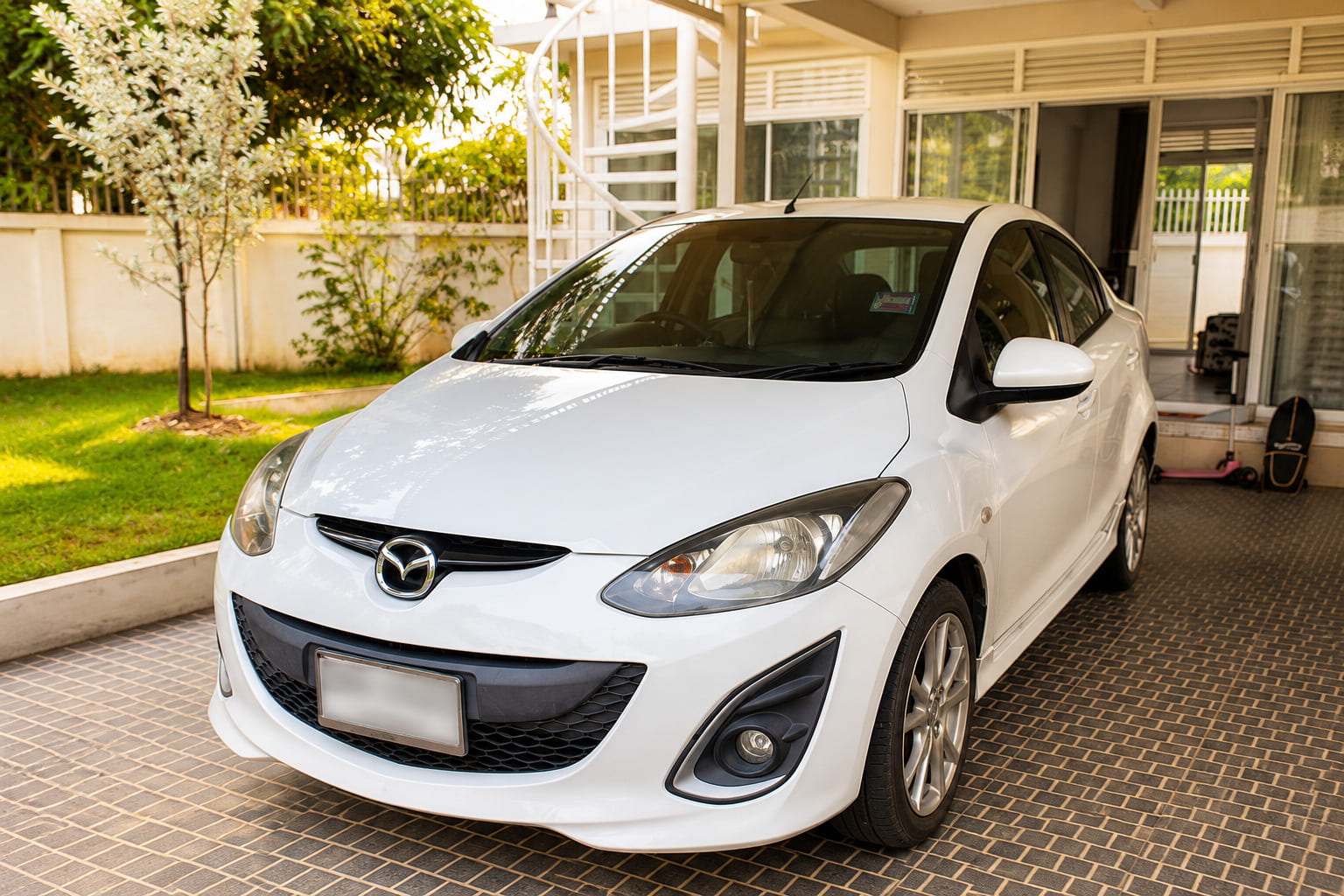
I also bought a used car, a Mazda 2 for 120,000 THB (~$3,650). Be warned that the fuel choice at Thai pumps is wider than you are probably used to, and the labels will not tell you which one your engine wants. Work that out before you are standing at the pump with a queue behind you.
Where to live: the main areas
The Old City suits people who want walkability and temples; Nimman is the café-and-coworking district popular with nomads; the suburbs give families more space and value. We landed somewhere different: Nong Hoi, a quiet residential area where we found our house through a personal introduction. It’s an older moobaan (housing estate), mostly Thai residents with few foreigners — calmer and more local than the nomad districts, which suits us as a family.
Moving with family and pets
A note on the photos: every image here is our own, taken as we go. We don’t publish our children’s faces — that is the one thing we keep private.
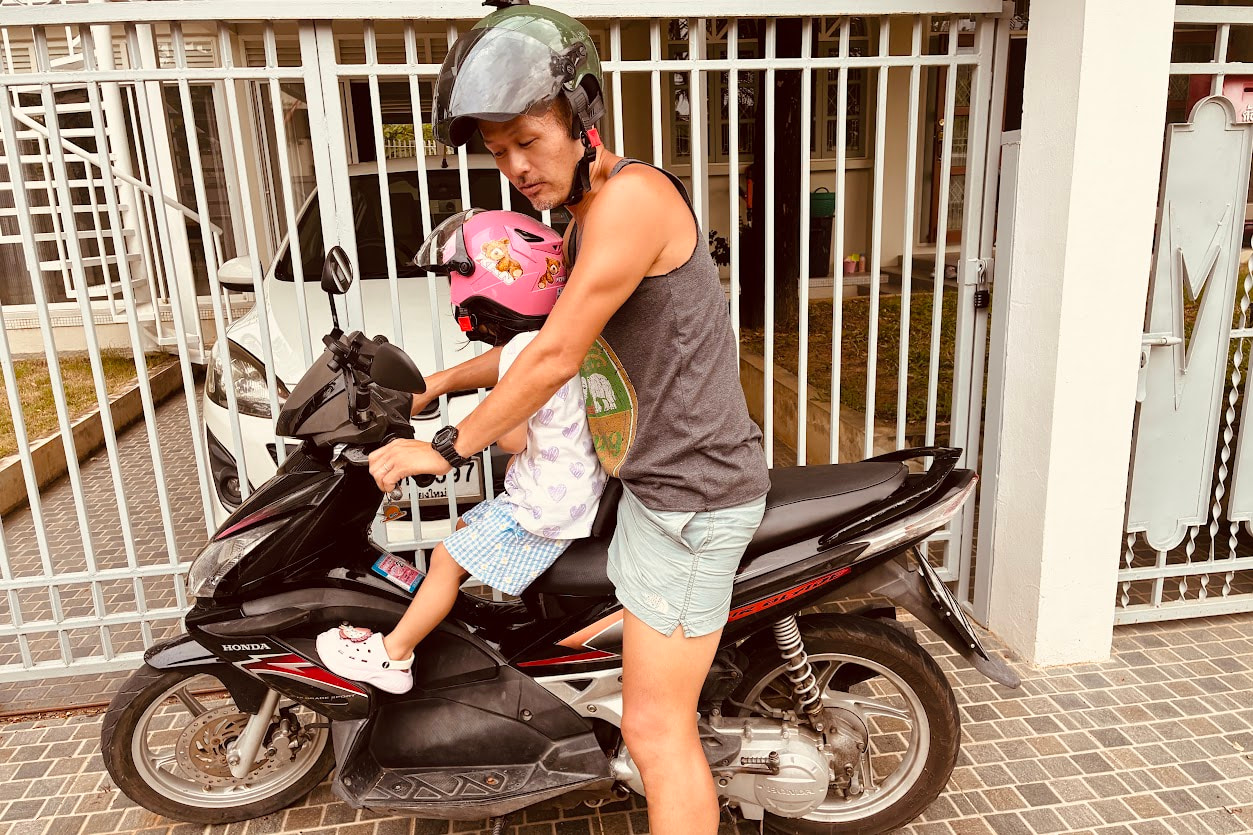
We moved with our daughter and our dog, so this part is written from the inside. Our daughter attends a K-2 bilingual program at an international school in Chiang Mai, and school fees are a separate line from our general budget. On pets: dog grooming cost 400 THB at a salon attached to a vet clinic, and several days out are genuinely free and pet- or kid-friendly — P.A.O. Park (free, dogs allowed), the Astropark space museum (free, a good weekend with kids), and Hey Day Cafe in San Pa Tong (free, with ducks, rabbits, and mini pigs).
Climate and daily life
Chiang Mai is not “hot all year.” Having lived through May, June, and July here, I can say the reality is more varied than the stereotype — there’s a cool season, a hot season, a green (rainy) season, and a burning season roughly February–April when air quality drops sharply, which is worth planning your calendar around. Food follows the seasons here: in July, lychee season is ending and longan is just coming in.
Ways of living: what we go out and see
Living here full time means the weekends are not sightseeing. They are the part of Chiang Mai that does not fit into a cost table. We drive out to villages in the hills and in Lamphun, sit with the people who make things there, and try the work with our own hands — silver first, natural dyeing next. I write each one up separately, with what I paid, what I was told, and what I still do not know.
The first of these was silver. A Karen household two and a half hours out of Chiang Mai, working in a house rather than a workshop, with nothing about the arrangement in English and no website to book through. I paid what they asked, I was shown how it is done, and I came home with something I had made badly. Prices there move with the silver market, so what I paid in August 2026 is a receipt and not a quote.
The second is a village in Li district, Lamphun — about two and a half hours south, in the other direction — where weaving and natural dyeing are done by households rather than by a business. I am deliberately careful about how I write these up. These are places where people live, not attractions, and I am not in the business of sending strangers to somebody’s front door. So I write what I paid, what I was told, and what I still do not understand, and I leave out anything that would turn a home into a destination.
→ Full guide: the day I made a silver ring with a Karen household — what I paid in August 2026, how the day actually ran, and the two different accounts I was given of where this silver comes from.
→ Full guide: the village in Lamphun that turned down the power line — what I saw there on 1 August 2026, what the public record says, and the assumption inside my own cost-of-living numbers that I had not noticed I was making.
→ Full guide: Yi Peng and Loy Krathong in Chiang Mai — the dates, the no-fly zones around the airport, and the flights that do not take off.
Getting there: flights and the two-base rhythm
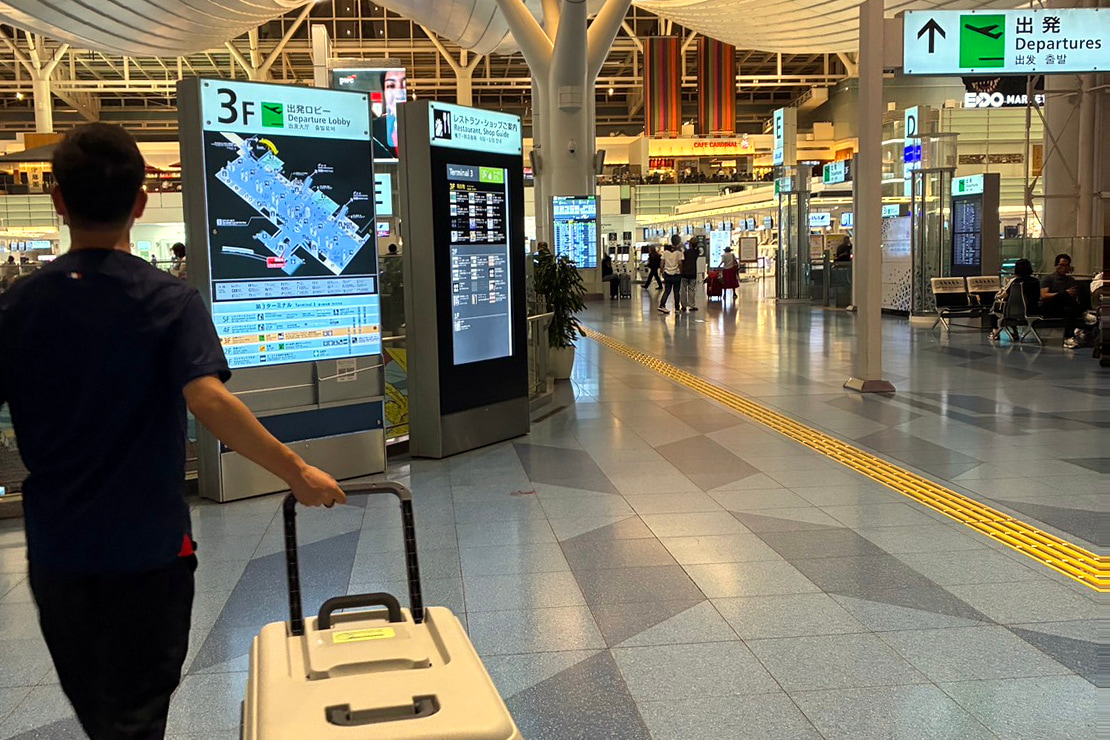
Because I live between Kamakura and Chiang Mai, I book this route often enough to have a system. For the move itself — flying with our dog — I chose JAL for the better cabin conditions, at about ¥74,000 (~$460) one way. For routine solo trips since then I fly budget, and my most recent return ticket between Chiang Mai and Kansai came to ¥74,980 — out on Thai VietJet’s overnight direct, back on Hong Kong Express via Hong Kong, where I slept in the airport. Airfares move constantly, so treat that as one receipt rather than a going rate. The trade-off is the usual full-service-versus-budget one — comfort and baggage allowance versus price.
Your first 30 days in Chiang Mai: a checklist
- Enter on your DTV (applied for from outside Thailand) and complete the Thailand Digital Arrival Card.
- Set up data — a local SIM, or a pocket-Wi-Fi + annual SIM plan (I bought mine on Lazada).
- Set up Wise and make your first low-fee transfer.
- Confirm your health insurance is active and note your nearest private hospital.
- Learn the songthaew routes (20–30 THB) and download Grab.
- Choose a neighbourhood and sign a short lease before a longer one.
- If staying long-term, start the Thai driving license process (200 THB health check first). Cars and motorbikes are separate licenses — you need both if you plan to do both.
- Note the 90-day address report if your stay will pass 90 days.
- Sort schooling and a vet if you moved with family or pets.
- Plan around the burning season (Feb–Apr) if your dates are flexible.
FAQ
Do you need a visa to live in Chiang Mai long-term?
Yes. The 5-year DTV is the route I took, and it allows 180-day stays. Tourist entries aren’t designed for actually living here.
How much money do you need for the DTV?
The MFA lists financial evidence of no less than 500,000 THB — bank statements, payslips or a sponsorship letter. Tokyo publishes it as bank statements for the past three months; other posts publish their own evidence requirements.
How much does it cost to live in Chiang Mai per month?
I have not lived here alone, so I cannot verify a single-person budget. Our rent is 25,000 THB a month.
Does the DTV require health insurance?
I was not asked for proof in Tokyo, and I could not find a published DTV insurance requirement.
Is Chiang Mai good for families?
Yes — international and bilingual schools, low costs, and a large expat community, though schooling and the burning season need planning.
Can you send money to Thailand without a Thai bank account?
Yes. Not having an account stops you holding baht and paying by QR, but it does not stop you transferring into somebody else’s Thai account. We paid 120,000 THB for a car that way, for a 61.44 THB fee.
Do you need a Thai SIM if you have an eSIM?
For a stay of months, yes. The travel eSIM I use is data-only, so it does not give me a Thai number, and deliveries, banks, schools and appointments here keep asking for a local number.

I split the year between Kamakura, Japan and Chiang Mai, Thailand, and write these guides from our own records, our own experience, and named sources. More about me.